How Trucking Carriers Actually Run the Haul — And Where Intelligence Wins
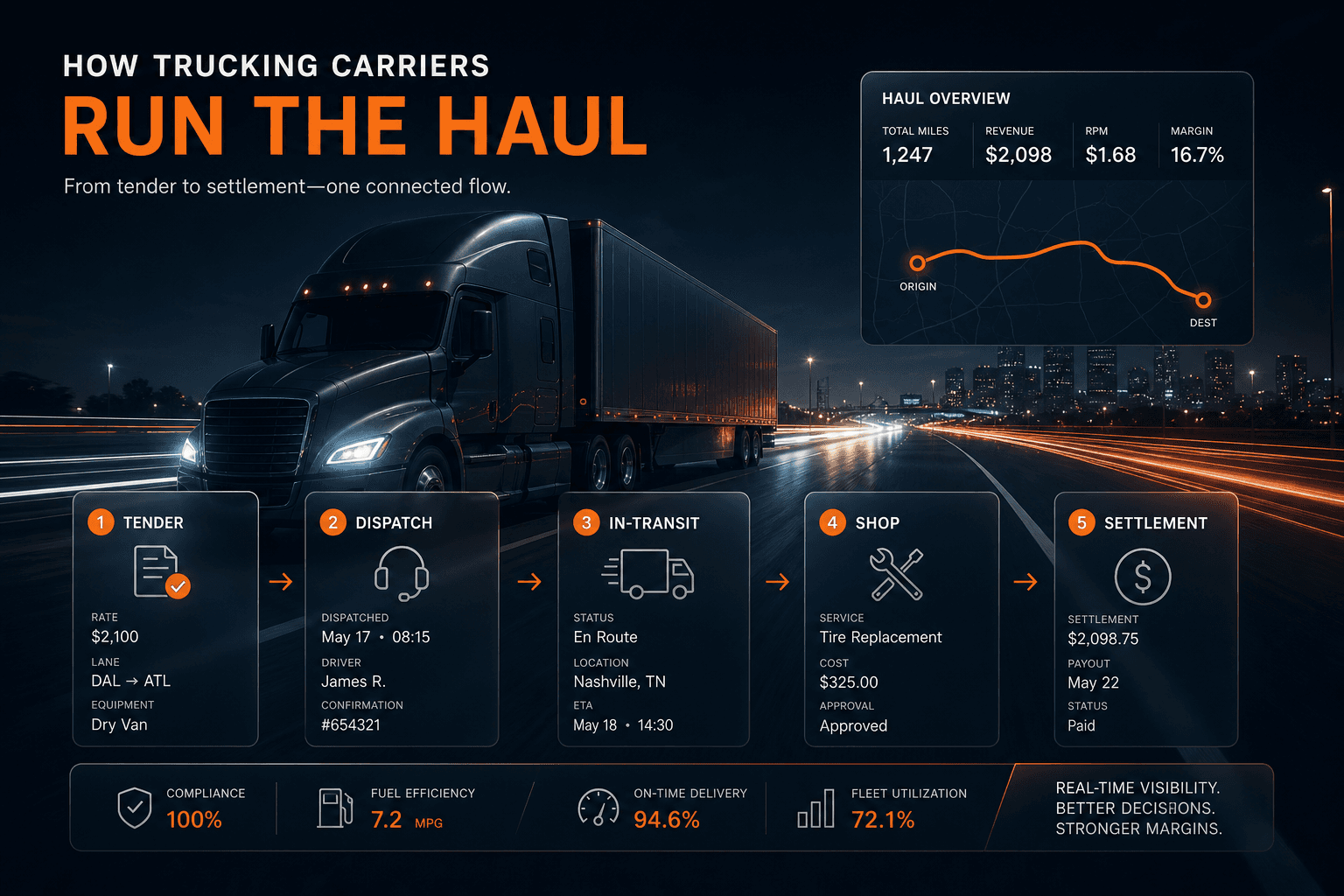
A motor carrier’s haul is not a single trip — it’s a closed loop. Sales and pricing set contract vs spot mix; planners position power and drivers for home time; dispatch assigns freight; ops fights detention, appointment misses, and in-transit exceptions; the shop keeps tractors and trailers earning miles; finance settles drivers and invoices customers. Break any link and CPM rises while revenue per truck falls.
Industry cost pressure makes that loop unforgiving. Average operating costs sit well above two dollars a mile, non-fuel costs keep climbing, and many truckload and reefer fleets run on razor-thin margins. Mega fleets and strong LTL networks absorb the chaos with process and people. Mid-size carriers feel every blind spot: a wrong lane bid, an idle trailer, a CSA BASIC that spikes insurance, or a shop backlog that puts revenue equipment on the ground.
Carriers already buy systems for pieces of the haul — TMS for orders and settlement, ELD/telematics for location and HOS, CMMS for work orders, fuel and IFTA for tax and spend. Those tools excel at capture and workflow. They rarely agree on definitions of utilization, empty miles, detention recovery, or true profitability by customer and lane. Teams export, reconcile, and argue. The haul keeps moving; the intelligence does not.
Winning fleets treat the haul as a decision system. They define north-star KPIs for leadership, give ops exception-first queues, and give finance a single CPM and margin model grounded in the same warehouse as safety and maintenance. AI then earns its keep: explaining why yesterday’s margin moved, which loads to avoid, which assets to shop next, and which customers are quietly destroying contribution. That is how fleet carriers turn haul execution into durable competitive advantage — not by buying another screen, but by closing the loop from tender to settlement with one trusted picture of the business.
Haseeb Tariq
Co-Founder at Vyntrix Labs
Keep reading
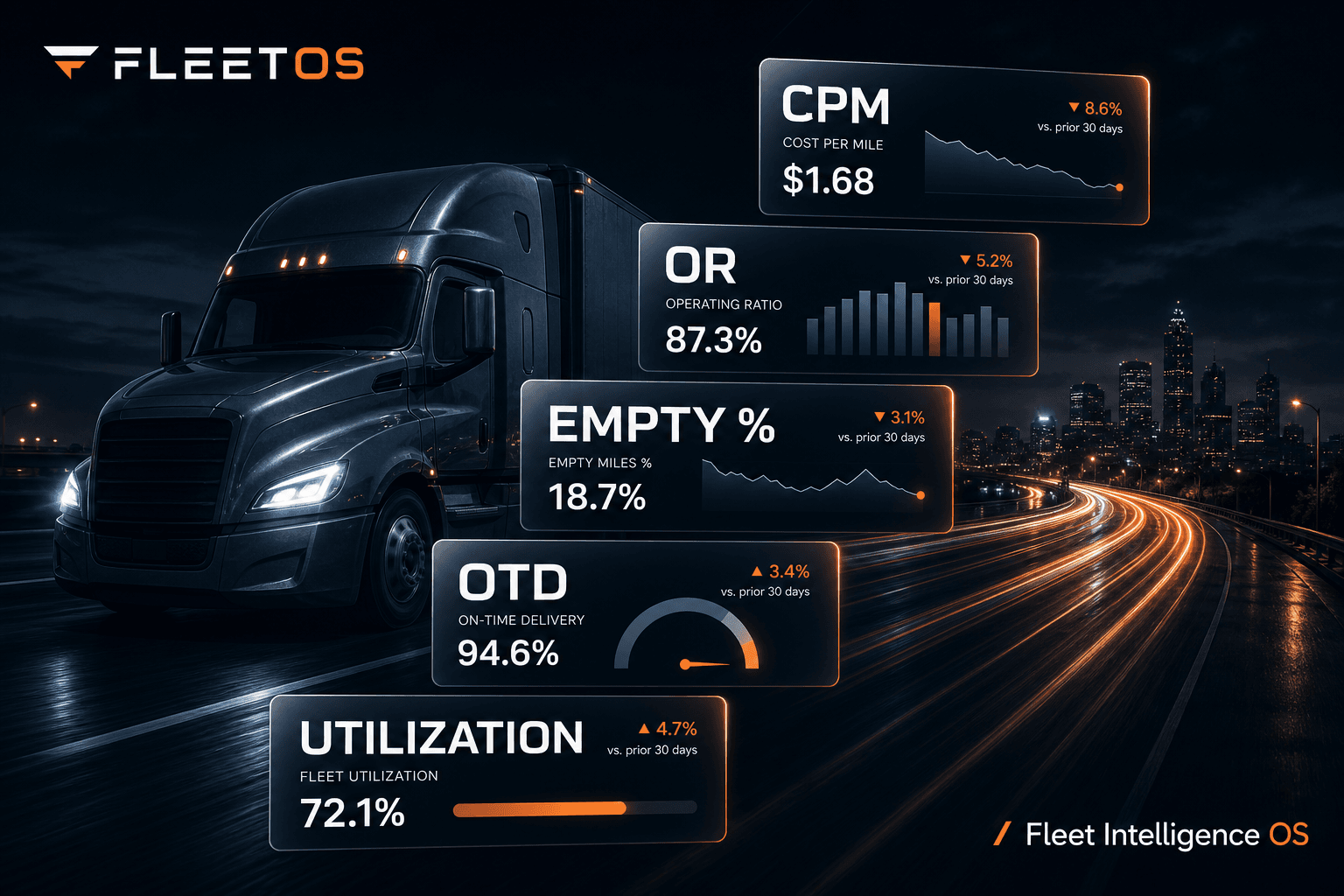
FleetOS: Why Fleet Intelligence Is More Than Dashboards
Motor carriers already own TMS, telematics, and shop systems. FleetOS is the governed decision layer on top — cost-per-mile truth, exception-first ops, and AI that explains what to do next.
Ashir Haroon
CEO
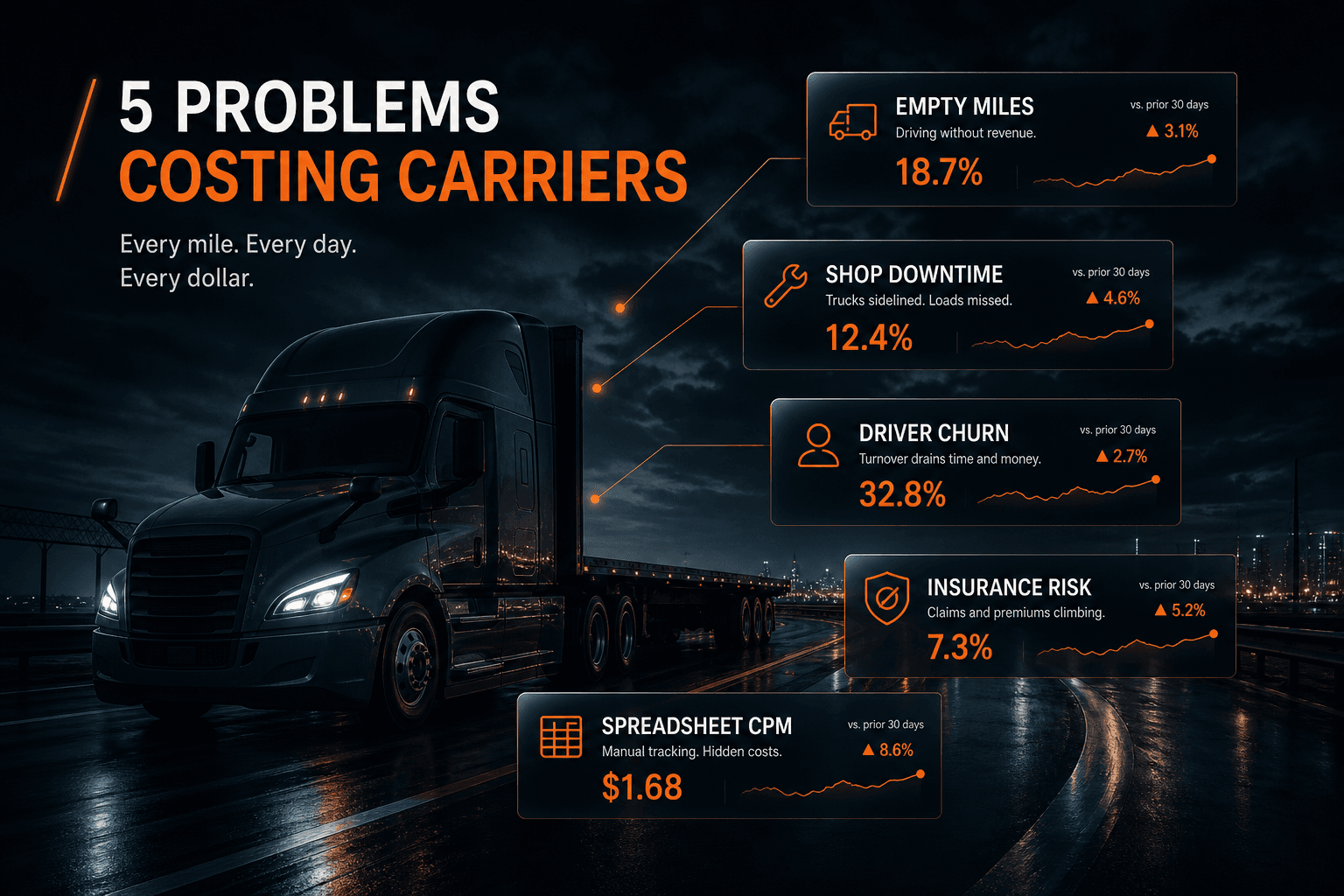
The Everyday Problems Trucking Carriers Still Fight — And Why They Persist
Missed tenders, empty miles, shop downtime, driver churn, insurance spikes, and spreadsheet CPM — the generic carrier pain list hasn’t changed. Here’s why the problems stick, and what actually moves the needle.
Sufyan
AI Engineer
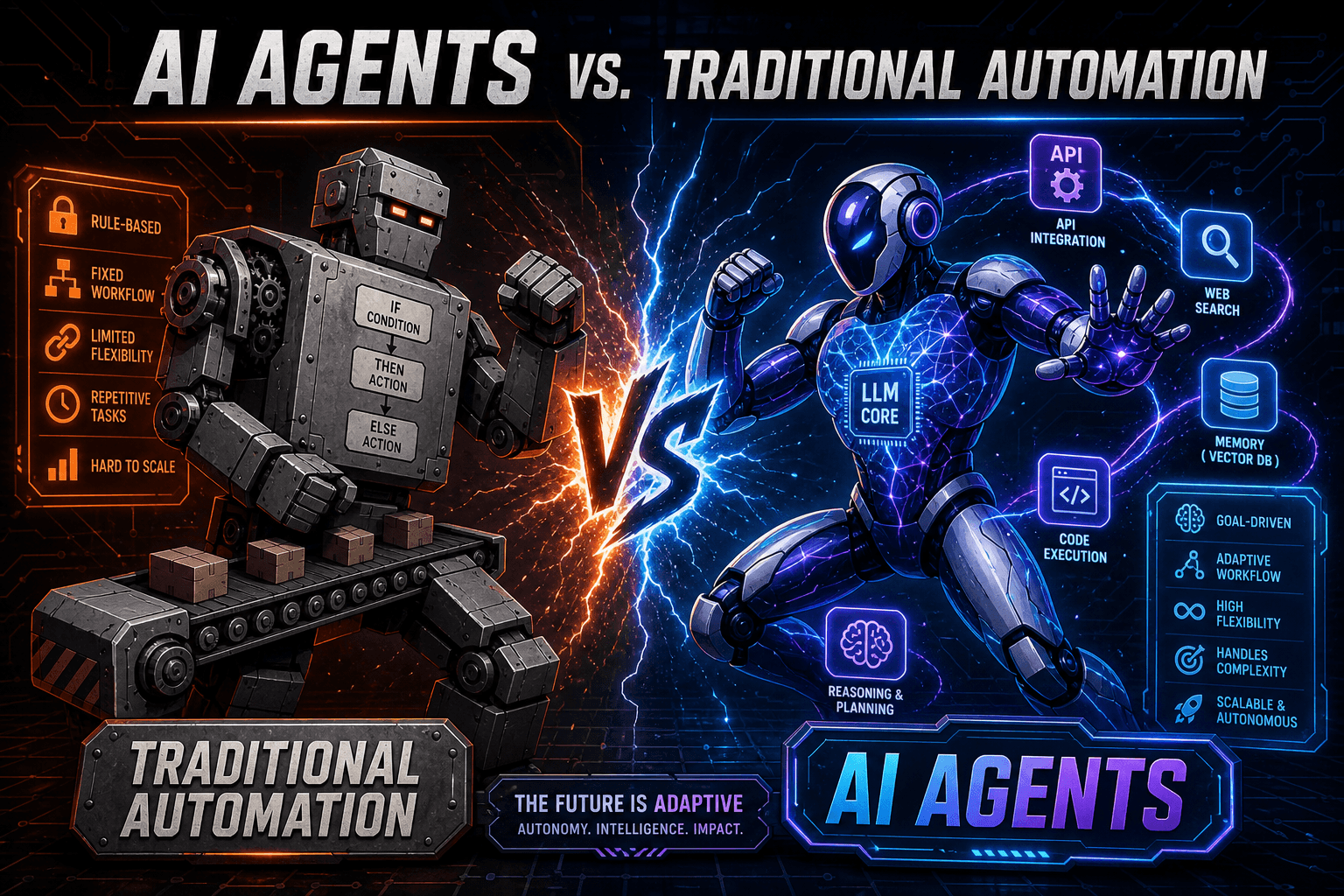
AI Agents vs. Traditional Automation: What's the Difference?
Automation follows rules. Agents make decisions. Here's how to know which one your business actually needs — and where they combine for maximum leverage.
Haseeb Tariq
Co-Founder