AI Agent Governance: Guardrails for Agents That Act on Your Business
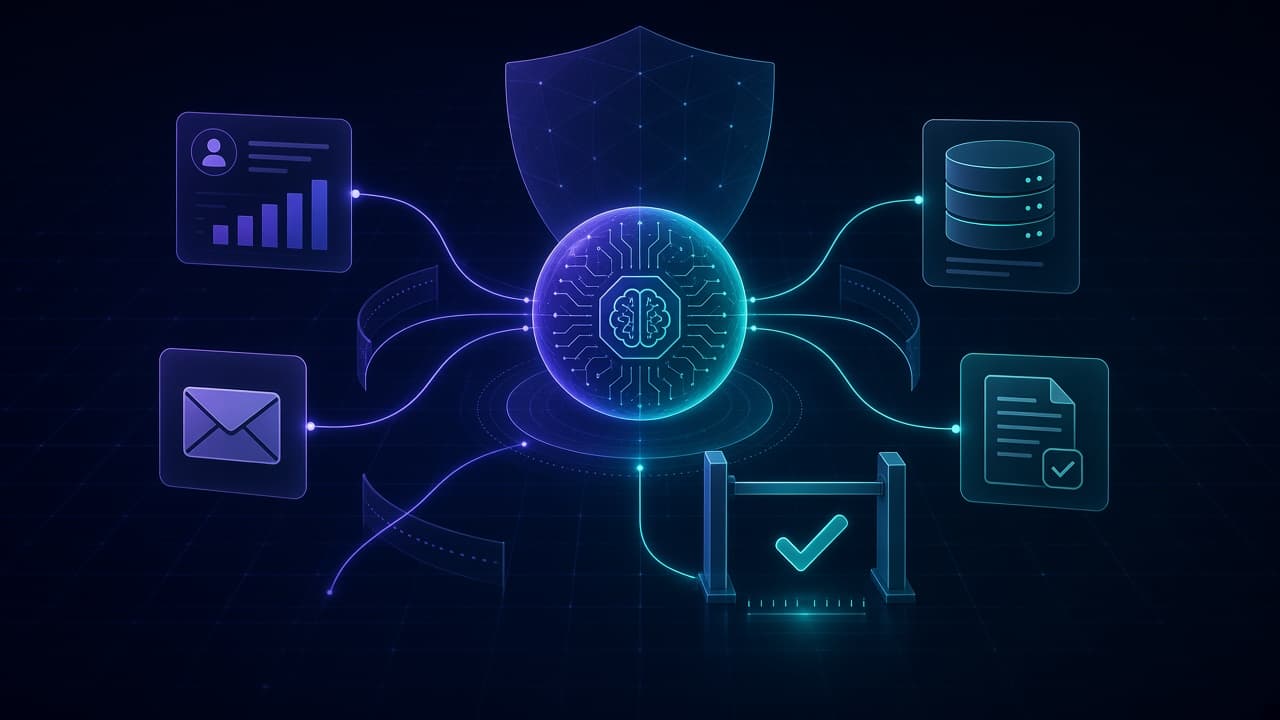
An AI agent that can read your CRM, send email, or update a record is not a chatbot with extra steps. It is software that takes actions on your behalf, sometimes without asking first. The moment an agent can act, governance stops being optional. The question is not whether to control it, but how much control matches the risk.
This guide covers the operational controls that matter when you deploy agents in production: what permissions they hold, what approvals they require, how you see what they did, and how you shut them down. It builds on the AI security guide, which covers data leakage, prompt injection, and provider terms. Here we focus on the agent's ability to act, not just to see.
Why governance matters more for agents
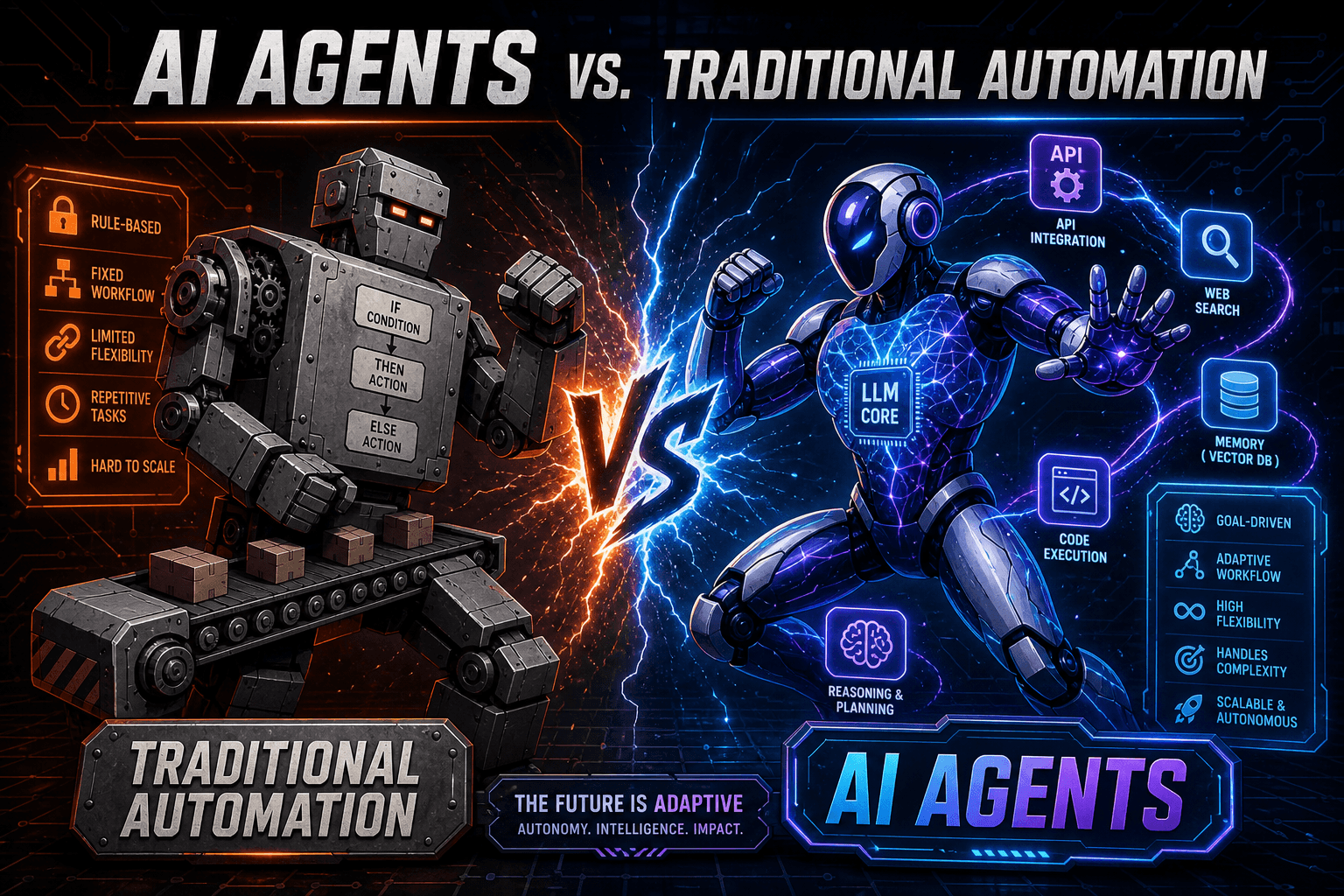
A traditional automation follows a fixed path. If it goes wrong, you can read the code and see why. An agent reasons toward a goal and chooses its own steps. That flexibility is the point, but it also means the agent can take a path you did not anticipate. Governance is how you define the boundaries the agent cannot cross, no matter how reasonable the path looks to the model.
The shift is happening now. As of October 2026, major providers are shipping always-on agents that connect to thousands of apps and run tasks in the background. Singapore published the first regulatory framework specifically for agentic AI in January 2026. Enterprise guidance from AWS, BCG, and others now treats agent governance as a prerequisite for production deployment, not an afterthought. If you are building or buying agents, the governance conversation is no longer optional.
The core governance pattern: evaluate before execution
The simplest model for agent governance is pre-dispatch evaluation. Every action the agent wants to take passes through a policy layer before it executes. The policy layer returns a decision: allow, deny, require human approval, throttle, or constrain. The action, the decision, and the evidence go to an audit log. If the agent bypasses the policy layer, it cannot reach the tool.
This pattern works because it treats the policy as infrastructure, not as a prompt. You do not ask the agent to follow rules. You enforce the rules in the layer the agent must traverse. A well-written prompt helps the agent behave well. A policy gate stops it from misbehaving even when the prompt fails.
Permission boundaries
An agent should not inherit a service account that can do everything. Scope the credentials to the tools the agent actually needs. If the agent schedules meetings, it needs calendar access, not payroll. If it drafts emails, it may not need the ability to send without review.
Permission boundaries have two sides. One is what systems the agent can reach. The other is what data within those systems the agent can see. An agent that queries your CRM for customer context should see only the records the requesting user is allowed to see, not the full database. This is the same principle as permission-aware retrieval in a RAG system: filter before the model sees the data, not after.
- Credentials scoped to the minimum tools for the task.
- Data access filtered by the user who started the request.
- Separate credentials for read and write, where the system allows it.
- Short-lived tokens instead of long-lived keys, where the integration supports it.
Action whitelists
An action whitelist defines what the agent is allowed to do, not just what systems it can reach. A CRM agent might be allowed to create a note, update a status, and log a call. It might not be allowed to delete a contact, change ownership, or export the database. The whitelist makes that boundary explicit and enforceable.
Whitelists are not static. When you add a tool to the agent, review the whitelist. When the model provider updates the agent's capabilities, review the whitelist. Treating the whitelist as a one-time configuration is a common failure. Treat it as a living artifact that tracks what the agent can do today, not what it could do at launch.
Human approval gates
Not every action needs a person in the loop. But some actions do. The question is which ones. A useful heuristic: require approval for actions that are hard to reverse, that leave your organization, or that affect finances or access.
- Sending an external email, especially to customers or prospects.
- Modifying billing, pricing, or contract terms.
- Changing user permissions or access levels.
- Deleting records or triggering irreversible workflows.
- Taking action on high-value accounts or sensitive data.
The approval gate should show the human what the agent wants to do, why, and what data it used. A button that says "approve" with no context is not oversight. It is theater. The agents we build include approval queues that surface the reasoning and the source data, so the approver can actually evaluate the request.
Audit trails
An audit trail answers the question: what did the agent do, when, and on whose behalf? The trail should capture every action the agent attempted, whether it was allowed or denied, and the policy that applied. If the action changed a system, the trail should include the before and after state, or at least a pointer to where that state is recorded.
Audit logs for agents are more demanding than logs for traditional automation. The agent's reasoning is part of the story. You need to see which documents it retrieved, which tools it considered, and what the model said before it chose an action. Without that context, you can see that the agent sent an email, but not why it thought that was the right thing to do.
| Field | Why it matters |
|---|---|
| Timestamp | When did the action happen? |
| User or session ID | Who initiated the request? |
| Agent identity | Which agent acted? |
| Action type and target | What did the agent try to do, and to what? |
| Policy decision | Was it allowed, denied, or escalated? |
| Policy rule ID | Which rule applied? |
| Retrieved context | What data did the agent see before deciding? |
| Model reasoning (summary) | Why did the agent choose this action? |
| Outcome | Did the action succeed, fail, or get rejected? |
Shutdown and rollback
Before you deploy an agent, know how to turn it off. That sounds obvious, but many teams cannot answer the question under pressure. Is there a kill switch? Does it stop in-flight actions or only new ones? If the agent already sent twenty emails, can you recall them? If it updated fifty records, do you have the original values?
Design the off switch before you need it. Test it before you ship. A feature that cannot be disabled safely is not ready for production, no matter how well it demos.
Governance by risk level
Not every agent needs the same controls. A drafting assistant that suggests text for a human to review is lower risk than an agent that sends email autonomously. A read-only reporting agent is lower risk than one that can modify records. Match the governance investment to the blast radius.
| Risk tier | Example | Typical controls |
|---|---|---|
| Low | Internal drafting assistant, read-only search | Authentication, basic logging, usage limits |
| Medium | CRM note creation, internal notifications | Whitelist, audit trail, rate limits, identity pass-through |
| High | External email, record updates, payment triggers | Approval gates, pre-dispatch policy, shutdown path, retention policies |
The Singapore framework for agentic AI recommends assessing risk based on three factors: the scope of actions the agent can take, the reversibility of those actions, and the level of autonomy. That framing applies whether or not you are operating under Singapore's jurisdiction. Scope, reversibility, and autonomy are the variables that determine how much governance you need.
Starting small
You do not need a six-month platform initiative to govern your first agent. A minimum viable governance setup has three components: one policy rule, one approval gate, and one audit trail.
- Pick the highest-risk agent. The one with production access, external API calls, or customer-facing output.
- Identify its most dangerous action. The one that would cause the most damage if it misfired.
- Add a single pre-dispatch rule that requires human approval for that action.
- Verify the gate works. Trigger the action and confirm it blocks until approval is given.
- Enable audit logging. Every governance decision should be recorded with the rule ID, timestamp, actor, and outcome.
- Expand. Add rules for more actions. Add more agents. Introduce rate limits and constraints for medium-risk actions.
This is how governance matures: one rule at a time, starting with the highest risk. The AI automation audit we run for clients includes a risk assessment that identifies which workflows and actions need governance first.
Common governance mistakes
- Relying on prompt instructions instead of enforced policy gates.
- Giving agents service accounts with broader access than the task requires.
- Treating action whitelists as static configuration instead of living documents.
- Approving actions without showing the approver the context and reasoning.
- Logging only successes, not denials and escalations.
- No tested shutdown path before production deployment.
- Assuming low-risk agents will stay low-risk as capabilities expand.
Governance and compliance
Governance is not the same as compliance, but good governance makes compliance easier. If you operate in a regulated industry, you already have documentation, access control, and audit requirements. Agent governance fits into that structure. The agent's permissions map to your access policies. The audit trail maps to your record-keeping requirements. The approval gates map to your segregation-of-duties controls.
The EU AI Act treats agentic systems in high-risk use cases, such as employment decisions, credit scoring, and critical infrastructure, as high-risk systems with full documentation, logging, and human oversight obligations. Even outside those categories, the logging requirements for multi-step reasoning with dynamic tool invocations are operationally important. If you cannot explain what the agent did and why, you cannot defend it in an audit.
Implementation checklist
- Inventory every agent and the tools it can access.
- Scope credentials to the minimum needed for each task.
- Define an action whitelist for each agent.
- Require human approval for irreversible or external actions.
- Log every action attempt with policy decision and context.
- Test the shutdown path before shipping.
- Review whitelists when tools or capabilities change.
- Classify agents by risk tier and match controls to the tier.
- Assign an owner for each agent who reviews incidents and policy changes.
Conclusion
Agent governance is not about slowing down adoption. It is about making sure you can adopt agents at scale without losing visibility or control. The teams that govern well will deploy more agents with more confidence. The teams that skip governance will spend their time on incidents, not on value.
Start with the highest-risk action on your highest-risk agent. Add one policy rule, one approval gate, and one audit trail. Then expand. The AI agents and AI automation we build ship with these controls by default, because governance is not a feature you bolt on later. It is how agents become trustworthy.
Frequently asked questions
Is agent governance required by law?
It depends on your industry and jurisdiction. The EU AI Act imposes strict requirements on high-risk agentic systems. Singapore published a framework in January 2026 that recommends governance practices for all agentic AI. Even where not legally required, governance is operationally necessary to deploy agents safely at scale.
Can prompt instructions replace policy gates?
No. A prompt instruction tells the model what you want it to do. A policy gate stops the action from executing if it violates a rule. Prompts can be bypassed by prompt injection or model error. Policy gates enforce the boundary whether or not the model cooperates.
How much does agent governance cost to implement?
The minimum viable setup, one rule, one approval gate, and one audit log, can be built in a day or two. A full governance layer with centralized policy management, identity federation, and observability is a larger investment. Match the investment to the risk tier of the agents you are deploying.
Haseeb Tariq
Co-Founder at Vyntrix Labs
Keep reading
AI Security and Compliance: A Practical Guide for Business Systems
What AI security actually covers (data leakage, prompt injection, access control, RAG permissions, audit logs, and governance) and a checklist for deciding how strong those controls need to be.
Haseeb Tariq
Co-Founder
AI Agents vs. Traditional Automation: What's the Difference?
Automation follows rules. Agents make decisions. Here's how to know which one your business actually needs, and where they combine for maximum leverage.
Haseeb Tariq
Co-Founder
RAG Knowledge Systems: Architecture, Security, and Implementation
How retrieval-augmented generation is built (ingestion, chunking, search, reranking, citations, permissions, evaluation) and when a knowledge base is the wrong tool.
Sufyan
AI Engineer