Objective-Driven AI Agents: Getting Your Internal Systems Ready for Agents That Act
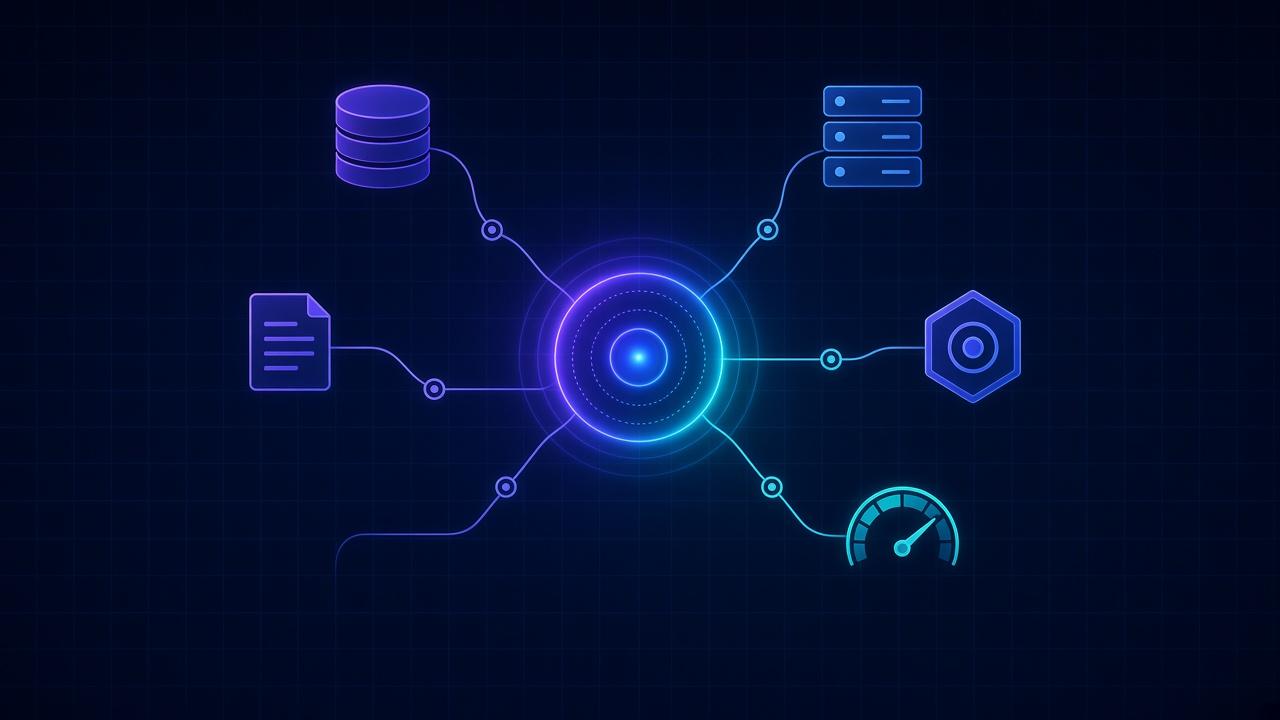
On October 8, 2026, Google announced a unified Gemini Enterprise agent at a Google Cloud event. The key shift, according to CEO Thomas Kurian, is that these agents can be given "objectives, not just instructions." The agent plans the work itself, uses custom skills and tools, and connects to businesses' internal systems to accomplish goals autonomously. Google also announced multi-model orchestration, smart routing between models, and real-time spend caps for cost control.
This follows OpenAI's ChatGPT Work, launched on July 9, 2026, which similarly runs multi-hour tasks across connected apps with scheduled tasks. The pattern is clear: agents are moving from reactive assistants to proactive systems that pursue objectives over extended periods, connecting to your CRM, databases, email, and internal tools along the way.
The shift from instruction-following to objective-driven operation is not just a marketing distinction. It changes what your internal systems need to support. An agent that receives step-by-step instructions can be constrained by those steps. An agent that receives an objective and plans its own path will interact with your systems in ways you did not script. Your infrastructure needs to be ready.
What changes with objective-driven agents
Traditional automation executes a defined workflow. A chatbot answers questions within a narrow scope. An instruction-following agent runs the steps you give it. An objective-driven agent is different: you give it a goal, and it decides which tools to use, what data to query, and what actions to take to achieve that goal.
This autonomy is the value proposition. An objective-driven agent can handle ambiguous requests, recover from errors, and adapt when conditions change. But that same autonomy means the agent will call your APIs, query your databases, and trigger actions in your systems in sequences you did not explicitly design. The systems the agent connects to become part of the agent's operating environment, not just passive data sources.
The difference between agents and traditional automation becomes sharper at this level of autonomy. Automation follows rails. Objective-driven agents navigate terrain. Your systems need to support navigation, not just provide rails.
Clean, well-documented APIs and integrations
An agent can only use what it can understand. When an agent connects to your internal system, it reads the API schema, endpoint documentation, and tool descriptions to decide which actions are relevant to its objective. If your APIs are poorly documented, inconsistently named, or missing descriptions, the agent will misuse them or skip them entirely.
- Every endpoint needs a clear, accurate description of what it does and when to use it.
- Parameter names and types should be self-explanatory. A parameter called "id" with no context is ambiguous; "customer_id" is not.
- Error responses should include actionable information. A 400 error with "invalid request" does not help an agent recover. A 400 with "customer_id must be a valid UUID" does.
- Deprecation notices should be explicit. If an endpoint is being retired, the documentation should say so, and the agent can route to the replacement.
- Rate limits and usage policies should be documented so agents can respect them without trial and error.
The same applies to internal tools and integrations. If your CRM has a custom integration layer, document it as if an external developer (or agent) will use it. The agent's ability to accomplish objectives depends on understanding what your systems can do.
Scoped service identities and least-privilege permissions
An objective-driven agent should not run with a service account that can do everything. If the agent's goal is to update customer records in the CRM, it should not have credentials that can also access payroll, delete databases, or modify billing. The principle is the same as for human users: grant the minimum permissions required for the task, nothing more.
This requires thinking about agent identity as a first-class concept. When an agent connects to a system, what identity does it present? What permissions does that identity have? Can you scope those permissions based on the objective the agent is pursuing, not just the agent's existence?
- Create dedicated service accounts for agent workloads, separate from human user accounts and from general automation service accounts.
- Scope credentials to specific APIs and actions. An agent that reads customer data does not need write access. An agent that creates records does not need delete access.
- Use short-lived tokens where possible. A token that expires in an hour limits the blast radius if compromised.
- Pass through user context when the agent acts on behalf of a user. The agent's CRM query should return only records the requesting user is authorized to see.
- Audit permission grants regularly. As agents gain capabilities, their permissions may drift broader than necessary.
The agent governance controls we recommend include permission boundaries as a core component. For objective-driven agents operating across multiple systems, those boundaries become even more critical.
Idempotent and reversible actions
An objective-driven agent may retry actions when they fail, or attempt the same operation from different angles as it works toward a goal. If your systems treat every API call as a unique transaction, you will end up with duplicate records, double charges, or conflicting state.
Idempotent APIs solve this problem. An idempotent operation produces the same result whether it runs once or multiple times with the same inputs. If the agent sends "create customer with email X" twice, an idempotent system returns the existing customer on the second call rather than creating a duplicate.
- Use idempotency keys for create operations. The client (or agent) provides a unique key; the server uses it to deduplicate requests.
- Make update operations idempotent by default. "Set status to X" is safer than "increment counter by 1."
- Return consistent responses for duplicate requests. The agent should not have to guess whether the operation succeeded on the first try.
Reversibility is the complement to idempotency. When an agent takes an action that turns out to be wrong, can it be undone? Soft deletes, version history, and undo endpoints give agents (and humans) the ability to recover from mistakes without data loss.
- Implement soft deletes where possible. A deleted record can be restored; a hard delete cannot.
- Maintain version history for critical data. If the agent overwrites a field incorrectly, you can roll back.
- Expose undo or revert endpoints for high-stakes actions. The agent (or a human reviewer) can reverse a mistake.
Human approval for consequential actions
Not every action an objective-driven agent wants to take should execute automatically. Some actions are too consequential, too irreversible, or too sensitive to delegate entirely. These actions need a human approval gate: the agent proposes, a human reviews, and only then does the action execute.
The question is which actions require approval. A useful heuristic: require approval for actions that are hard to reverse, that leave your organization, that affect finances or access, or that touch high-value or sensitive data.
- Sending external communications (emails to customers, messages to partners, public posts).
- Modifying financial data (invoices, payments, pricing, contract terms).
- Changing access controls (user permissions, API keys, security settings).
- Deleting data or triggering irreversible workflows.
- Acting on high-value accounts or records flagged as sensitive.
The approval workflow should show the approver what the agent wants to do, why it believes this is the right action, and what data it used to reach that conclusion. A button that says "approve" with no context is not oversight. It is rubber-stamping. The MCP gateway pattern includes approval routing as a core capability.
Audit logs and observability
When an objective-driven agent operates across your systems, you need to know what it did, when, on whose behalf, and why. This is not optional for compliance, incident response, or debugging. It is the foundation for trusting agents with real work.
Every system the agent touches should log the interaction. But agent interactions require more context than typical API logs. You need to capture not just the request and response, but the agent identity, the user context, the objective being pursued, and the reasoning that led to this action.
| Field | Why it matters |
|---|---|
| Timestamp | When did the action occur? |
| Agent identity | Which agent made the request? |
| User context | On whose behalf was the agent acting? |
| Objective or task ID | What goal was the agent pursuing? |
| Action and target | What did the agent do, and to what? |
| Request parameters | What inputs did the agent provide? |
| Response summary | What was the outcome? |
| Reasoning (if available) | Why did the agent choose this action? |
Centralize these logs where possible. If the agent interacts with five systems, you want one view that reconstructs the full sequence of actions, not five siloed logs you have to correlate manually. Observability platforms and MCP gateways can provide this unified view.
Cost controls: budgets, routing, and spend caps
One of the notable features Google announced alongside objective-driven agents is real-time spend caps. This is not a coincidence. An agent pursuing an objective autonomously can run up costs quickly: API calls to paid services, compute for long-running tasks, model inference costs that scale with usage.
Cost control for agents has several layers.
- Per-task budgets. Define a maximum cost the agent can incur while pursuing a specific objective. If it hits the cap, it pauses and reports rather than continuing.
- Rate limits on expensive operations. Some API calls cost more than others. Limit how many the agent can make per hour, per day, or per task.
- Smart model routing. Use less expensive models for simple subtasks and reserve expensive models for complex reasoning. Google's multi-model orchestration announcement explicitly addresses this.
- Real-time spend monitoring. Track costs as the agent works, not after the bill arrives. Alert when spend approaches thresholds.
- Automatic pause or escalation. If an agent is burning through budget faster than expected, stop it and flag for human review.
The systems your agent connects to play a role here too. If your internal APIs have usage costs (cloud database queries, third-party service calls, metered integrations), expose those costs so the agent (or its orchestration layer) can factor them into decisions.
Data quality and access boundaries
An objective-driven agent is only as good as the data it can access. If your CRM is full of duplicate records, your database has stale information, or your internal knowledge base is outdated, the agent will make decisions based on bad data. Garbage in, garbage out applies to agents just as it does to any system.
- Clean your data before exposing it to agents. Deduplicate records, update stale information, archive obsolete entries.
- Mark data quality explicitly where possible. If a record has not been verified in 90 days, flag it. The agent can factor that into its confidence.
- Set clear access boundaries. Not every agent needs access to every dataset. Scope data access to what is relevant for the objective.
- Respect user privacy and data governance policies. If certain data should not leave a specific system or be used for certain purposes, enforce that in the integration layer.
Access boundaries also protect against accidental data leakage. An agent pursuing one objective should not inadvertently expose data from a different context. The same permission-aware retrieval principles from RAG systems apply: filter by user authorization before the agent sees the data.
A phased rollout plan
You do not need to make every system agent-ready before deploying your first objective-driven agent. A phased approach lets you build confidence while limiting risk.
Phase 1: Read-only access to low-risk systems
Start by giving agents read access to systems where mistakes are recoverable and data is not sensitive. A reporting agent that queries dashboards, a search agent that looks up documentation, or an assistant that retrieves calendar availability. Monitor what the agent queries, how often, and whether the results are accurate.
Phase 2: Write access with human approval
Expand to systems where the agent can take action, but require human approval for every write operation. The agent drafts the email, the human sends it. The agent proposes the CRM update, the human confirms it. This builds trust in the agent's judgment while maintaining control.
Phase 3: Autonomous action on low-stakes operations
Once you trust the agent's judgment on specific actions, remove the approval gate for low-stakes operations. Creating internal notes, updating non-critical fields, sending routine notifications. Keep approval gates on high-stakes actions.
Phase 4: Broader autonomy with guardrails
Expand the agent's scope progressively. Add more systems, grant more permissions, reduce approval requirements as confidence grows. But keep the guardrails: audit logs, cost caps, permission boundaries, and approval gates for consequential actions.
| Phase | Access level | Controls |
|---|---|---|
| 1 | Read-only, low-risk systems | Logging, rate limits, monitoring |
| 2 | Write access with approval | Human approval for all writes, audit trail |
| 3 | Autonomous low-stakes writes | Approval for high-stakes only, cost caps |
| 4 | Broader autonomy | Permission boundaries, observability, escalation paths |
Getting started: a minimum viable checklist
If you are preparing your systems for objective-driven agents, here is a starting checklist. You do not need all of these on day one, but you should have a path to each.
- Inventory the systems an agent will need to access. CRM, databases, email, internal tools, APIs.
- Audit API documentation. Can an agent understand what each endpoint does from its schema and description?
- Create scoped service accounts. Do not let agents inherit broad service account permissions.
- Implement idempotency for create and update operations. Expect retries.
- Add soft deletes and version history to critical data stores.
- Define which actions require human approval. Build the approval workflow.
- Enable structured logging for agent interactions. Include agent identity, user context, and action details.
- Set cost budgets and rate limits. Monitor spend in real time.
- Clean and classify your data. Remove duplicates, flag stale records, set access boundaries.
- Start with Phase 1: read-only access, log everything, build confidence.
How Vyntrix Labs helps
We build AI agents and the integrations that connect them to business systems. When we deploy objective-driven agents for clients, we implement the patterns in this guide: scoped permissions, idempotent APIs, approval workflows, and observability from day one. The agent ships with the infrastructure your compliance and security teams need.
For organizations preparing their systems for agent adoption, we offer API integration services that bring legacy and internal systems up to the standard agents require: clean schemas, consistent documentation, and proper error handling. We also conduct AI automation audits that assess your current infrastructure against the readiness criteria agents demand. See AI agents for custom agent development.
Conclusion
The shift to objective-driven AI agents is happening now. Google and OpenAI are shipping agents that pursue goals autonomously, connect to business systems, and operate over extended periods. These agents will interact with your internal systems in ways instruction-following agents did not.
The systems that succeed will be the ones that are ready: clean APIs the agent can understand, scoped permissions that limit blast radius, idempotent operations that handle retries, approval gates for consequential actions, audit trails that answer "what happened and why," and cost controls that prevent runaway spend. None of this is exotic. It is infrastructure hygiene applied to a new class of caller.
Start with one system. Audit its documentation, scope its credentials, enable logging, and connect a read-only agent. Build confidence, then expand. The teams that prepare their systems now will deploy agents faster and more safely than those who wait.
Frequently asked questions
What is an objective-driven AI agent?
An objective-driven AI agent is given a goal (an objective) rather than step-by-step instructions. The agent plans its own approach, decides which tools and data sources to use, and takes actions autonomously to achieve the objective. This differs from instruction-following agents that execute predefined steps or chatbots that respond to individual queries.
Why do internal systems need to change for objective-driven agents?
Objective-driven agents interact with your systems in ways you did not explicitly script. They may query APIs in unexpected sequences, retry failed operations, or access data across multiple systems to accomplish a goal. Systems need clean documentation so agents understand them, scoped permissions to limit risk, idempotent APIs to handle retries, and audit logs to track what the agent did.
How do I limit costs when agents run autonomously?
Implement per-task budgets that cap how much an agent can spend pursuing an objective, rate limits on expensive operations, smart model routing that uses cheaper models for simple tasks, and real-time spend monitoring with automatic pauses when thresholds are approached. Google's announcement specifically highlighted real-time spend caps as a feature for enterprise agent deployments.
Which actions should require human approval?
Require approval for actions that are hard to reverse, leave your organization, affect finances or access, or touch sensitive data. Examples: sending external emails, modifying invoices or contracts, changing user permissions, deleting records, or acting on high-value accounts. The approval interface should show what the agent wants to do and why.
Can I start small with objective-driven agents?
Yes. Start with read-only access to low-risk systems like internal documentation or reporting dashboards. Monitor how the agent queries data and whether results are accurate. Then expand to write access with human approval, then autonomous action on low-stakes operations, increasing scope as confidence grows. Keep guardrails in place throughout.
Haseeb Tariq
Co-Founder at Vyntrix Labs
Keep reading
AI Agent Governance: Guardrails for Agents That Act on Your Business
How to govern AI agents that take real actions: permission boundaries, approval gates, action whitelists, audit trails, and the minimum controls to deploy agents in production without losing visibility.
Haseeb Tariq
Co-Founder

MCP Gateways: Governing AI Agent Tools at Enterprise Scale
As AI agents connect to dozens of MCP servers across your organization, tool sprawl becomes a governance crisis. MCP gateways provide the control layer enterprises need: central registries, identity federation, per-agent scopes, policy gates, and audit trails.
Haseeb Tariq
Co-Founder
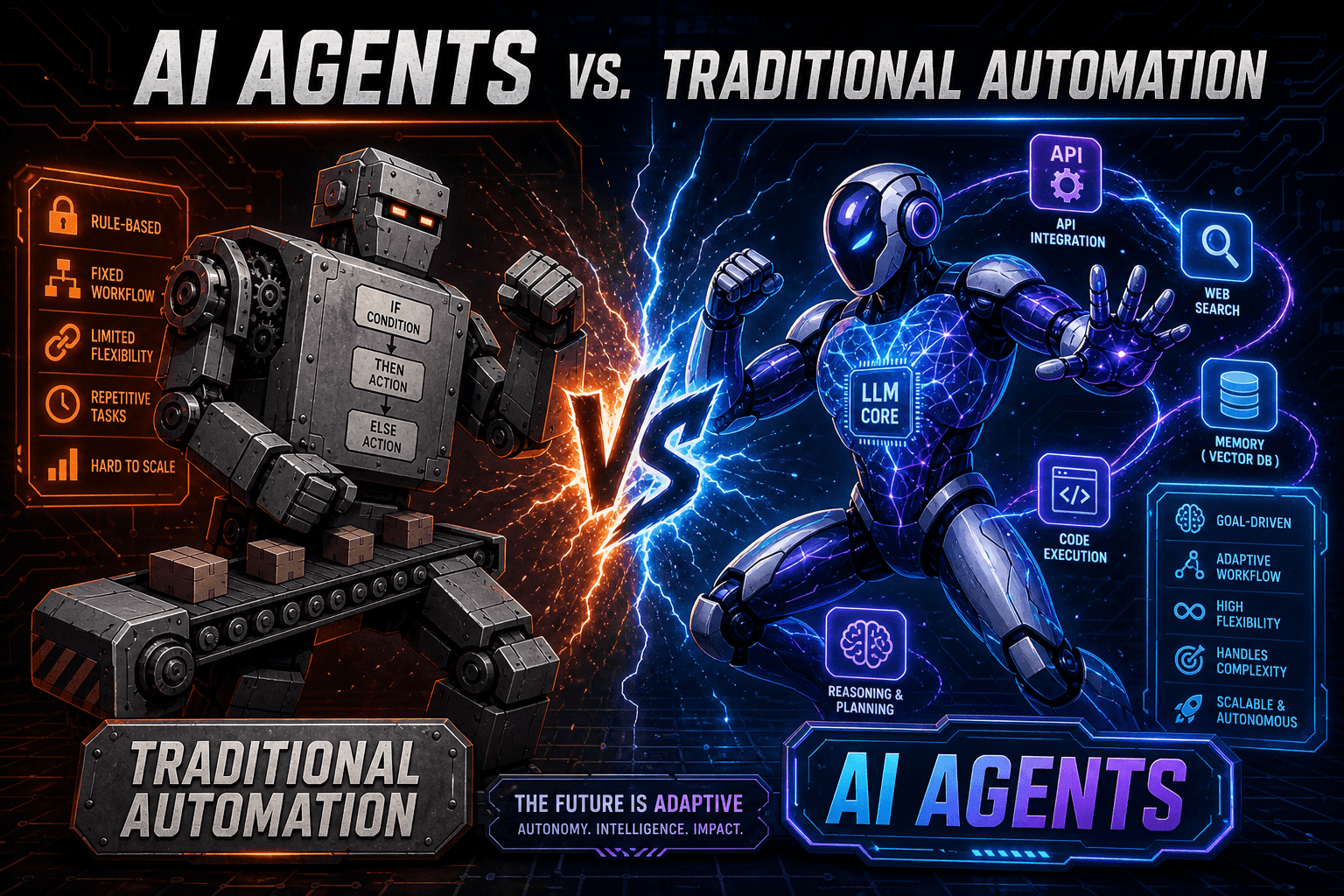
AI Agents vs. Traditional Automation: What's the Difference?
Automation follows rules. Agents make decisions. Here's how to know which one your business actually needs, and where they combine for maximum leverage.
Haseeb Tariq
Co-Founder